

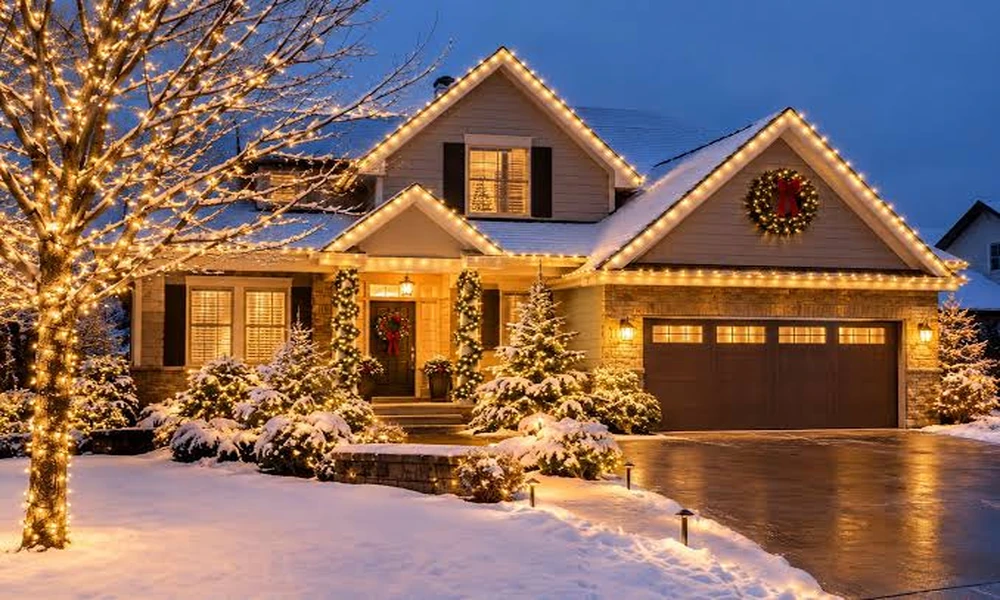
The Yearly Scramble That Nobody Actually Enjoys
Every November, thousands of Utah homeowners climb onto icy roofs, dig through garages for tangled strands, and spend a weekend wrestling with ladders in freezing temperatures. If that routine gets skipped or rushed, the result is often a house that looks unfinished compared to neighbors, a string of lights that fails halfway through December, or worse, a fall from a ladder that turns a festive weekend into an emergency room visit. The stakes are higher than they seem at first glance, because winter light installation accidents send a measurable number of people to urgent care clinics across the Wasatch Front each year.
Beyond the physical risk, there’s the financial drain of replacing cheap light sets that burn out after one or two seasons. Homeowners buy new strands, new clips, and new extension cords almost annually, and the cost adds up faster than most people track. Add in the time spent untangling storage bins and the stress of coordinating a display before an early snowstorm hits, and the whole tradition starts to feel like a chore rather than a celebration. Utah’s weather window for comfortable outdoor work is narrow, often closing by mid-November, which puts pressure on families to get it right the first time or not at all.
Neighbors who’ve dealt with a burned-out strand mid-display know the frustration of driving to a hardware store in freezing weather just to find matching bulbs. Extension cords left outside all season develop cracks that create safety hazards long before anyone notices. Even careful homeowners end up with a patchwork look by the second week of December, as sections dim or flicker while the rest of the display holds steady. None of this reflects poor effort; it reflects the limits of equipment that was never built to survive a full Utah winter in the first place.
A Fixed System Changes the Calculus Entirely
The alternative gaining traction across Salt Lake County, Utah County, and beyond is a fixed lighting system installed once along the rooflines, eaves, and architectural features of a home, then controlled remotely for every holiday and season. Instead of climbing a ladder each year, homeowners flip a switch or tap an app to activate permanent holiday lighting designed to withstand Utah’s temperature swings, wind, and snow load without needing replacement year after year. The lights stay in place behind trim and gutters, nearly invisible until they’re turned on, which also solves the aesthetic complaint many neighborhoods have about visible clips and cords during the off-season.
The practical shift is less about convenience and more about reliability. Commercial-grade LED fixtures rated for permanent outdoor exposure last considerably longer than the consumer strands sold in big box stores each fall, and they’re built to handle the freeze-thaw cycles that crack cheaper plastic housings. Many systems also allow homeowners to switch colors for different occasions, meaning the same installation that glows red and green in December can shift to orange for Halloween or school colors for football season. That flexibility turns a once-a-year expense into a year-round feature of the home.
Installation itself typically happens in late summer or early fall, before contractors get buried under the holiday rush, and before Utah’s first snow makes rooftop work risky. A professional crew handles the wiring and mounting, which matters in a state where sudden early storms aren’t uncommon in the mountain valleys. Homeowners who’ve made the switch often mention the simple relief of not checking the weather forecast anxiously, wondering if they’ll get one more dry weekend to finish hanging lights before temperatures drop.
Maintenance drops off considerably once a system is in place, since there’s no annual untangling, testing, or replacing of sun-damaged plugs. Many homeowners report spending less time managing their lighting across an entire year than they used to spend on a single December weekend. Families with young kids or aging parents also mention the safety benefit of never needing anyone on a ladder again once the system is wired in correctly.
There’s also a resale angle that doesn’t get discussed as often. Real estate agents in several Utah markets have noted that homes with discreet, built-in lighting systems show better during winter listings, since the exterior can be lit for showings without any visible hardware cluttering the roofline. Buyers tend to notice details like that, even if they can’t articulate why a house feels more polished. For homeowners thinking beyond this season into the next five or ten years, that kind of quiet upgrade tends to pay for itself in ways that go well beyond the holidays.
