

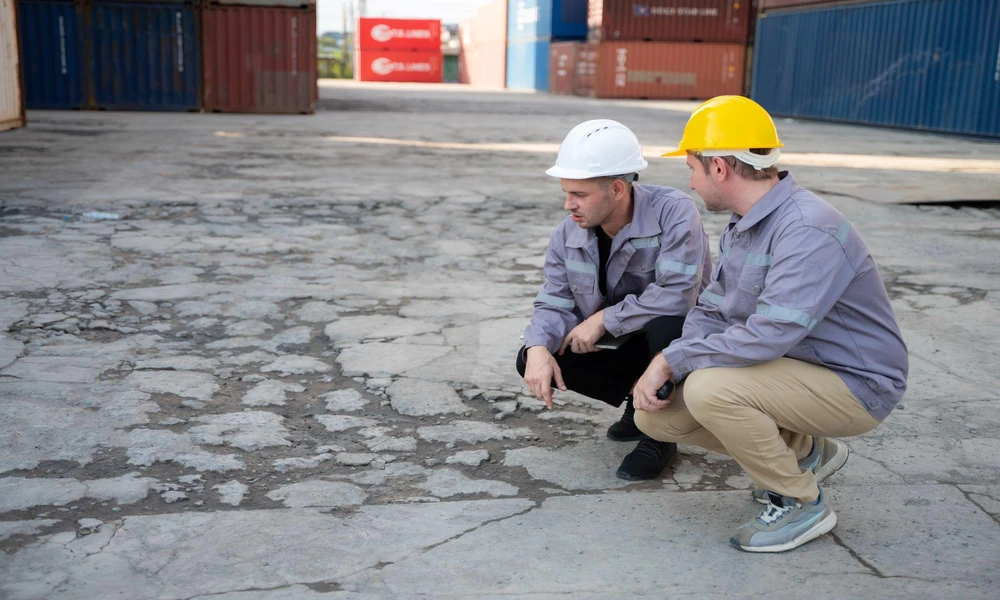
A facility manager walks the same driveway every day and stops noticing the gradual changes. A hairline crack widens over a few months, a slight depression forms near the loading bay, and the surface near the gate looks a little uneven after heavy rain. Individually these seem minor and easy to postpone, particularly when operational budgets are already committed elsewhere. The difficulty with pavement deterioration is that it accelerates rather than progressing at a steady rate: water enters through cracks, weakens the base beneath, and what could have been a localised patch becomes full-depth reconstruction across a much larger area. Four signs indicate a surface has moved past routine wear and warrants prompt attention.
1. Interconnected Cracking Forming a Web Across the Surface
Isolated cracks are common and often manageable, appearing as a normal consequence of temperature variation and ordinary use. What matters is when cracks begin linking into an interconnected pattern resembling a web across an area of the surface. This pattern generally indicates fatigue failure, meaning the pavement structure beneath is no longer adequately supporting the loads passing over it. Left untreated, sections within the cracked area begin breaking loose, and water reaching the base accelerates deterioration considerably. Identifying this pattern early allows targeted road repair in Singapore before the affected area expands into neighbouring sections of the driveway.
2. Depressions or Rutting Where Vehicles Stop and Turn
Visible depressions along wheel paths, near loading bays, or at turning points indicate the surface is deforming under load rather than simply wearing. These locations concentrate stress in ways that through-traffic areas do not, since stationary and slow-moving vehicles apply sustained pressure to the same points rather than distributing it. These areas also collect water, which compounds the problem by softening the material beneath. Depressions deep enough to hold standing water after rainfall should be treated as urgent, since the combination of load and trapped water tends to deteriorate a pavement faster than either factor alone.
3. Potholes Appearing or Edges Breaking Away
A pothole is not an early warning. By the time one has formed, the surface layer has already failed locally and water has reached the layers beneath, which means the damage extends deeper than the visible opening suggests. Potholes also spread quickly under heavy traffic, as each vehicle passing over the edge dislodges more material. Loose debris creates hazards for vehicles and pedestrians and can damage tyres on heavy plant that operates across the site daily. Crumbling edges along the driveway boundary indicate a similar loss of structural integrity and tend to progress inward if left unaddressed, gradually narrowing the usable width of the surface.
4. Water Pooling That Wasn’t There Before
Ponding in new locations suggests the surface profile has changed, usually because settlement or deformation has altered the falls that previously drained water away. Beyond signalling underlying movement, standing water causes ongoing damage by penetrating the pavement and weakening the base, which in turn deepens the depression and allows still more water to collect. This sign is easy to dismiss as a drainage nuisance when it’s often the visible symptom of a structural problem developing underneath, and it tends to worsen noticeably through periods of sustained rainfall.
Red Flags Worth Watching For
- Cracks linking into an interconnected web across an area of surface
- Depressions or rutting where vehicles stop, turn, or queue
- Potholes forming, or edges crumbling and breaking away
- Water pooling in locations where it previously drained away
Why Early Intervention Costs Less
The economics here are straightforward. Sealing cracks and patching localised failures while damage is confined to the surface layer is a fraction of the cost of full-depth reconstruction, and it can usually be completed with limited disruption to site operations, often outside normal working hours. Once water has compromised the base and subgrade, repair requires excavation and rebuilding, which takes longer, costs substantially more, and often means closing sections of a working facility for extended periods while the new structure is laid and cured. For a logistics or manufacturing site where vehicle access determines throughput, that operational cost frequently exceeds the repair bill itself. Facility managers who arrange periodic inspections through road maintenance services in Singapore, rather than responding only when damage becomes obvious, generally spend less over a pavement’s lifetime and avoid the operational disruption that emergency road repair in Singapore inevitably brings.
Contact United E&P to arrange an inspection of your facility’s driveway and identify which areas need repair before deterioration spreads.
