

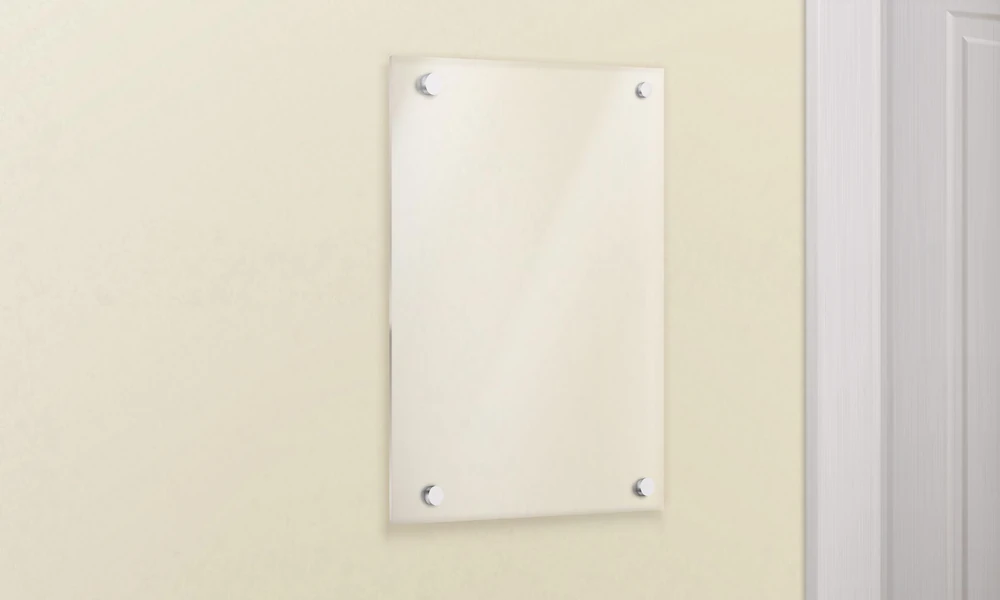
Acrylic has become one of the more popular materials for signage in Singapore, largely because it can be fabricated in several distinct styles depending on the look a business is going for. Understanding how flat, layered and 3D acrylic signage actually differ makes it easier to choose the right style for a specific space.
Flat Acrylic Signage
Flat acrylic signage is the simplest of the three styles, consisting of a single, uniform panel.
- A clean, minimalist appearance that suits businesses wanting a straightforward, understated look.
- Generally the most cost-effective option among the three styles, given its simpler fabrication process.
- Limited visual depth, relying mainly on colour, printing or engraving for visual interest.
Layered Acrylic Signage
Layered acrylic signage introduces multiple panels stacked or spaced apart to create a sense of depth.
- Visible separation between layers, often achieved using standoffs or spacers between panels.
- A moderate level of visual complexity that adds interest without becoming overly elaborate.
- Shadows cast between layers can enhance the sign’s appearance, particularly under certain lighting conditions.
3D Acrylic Signage
3D acrylic signage involves individually shaped letters or elements that stand out prominently from the mounting surface.
- Letters or logos cut and shaped into three-dimensional forms, creating a distinctly bold, sculptural look.
- Often paired with lighting, such as backlighting or edge-lit effects, to enhance the three-dimensional appearance further.
- Generally the most involved to fabricate, reflecting a higher level of visual impact and detail.
Comparing the Three Styles
| Style | Visual Depth | Typical Complexity |
|---|---|---|
| Flat | Minimal, single-panel look | Low |
| Layered | Moderate depth through stacked panels | Medium |
| 3D | Strong dimensional, sculptural look | High |
This comparison reflects general tendencies, since specific fabrication choices can shift the complexity and cost of each style further.
Choosing Based on Setting and Purpose
The right style often depends less on personal preference alone and more on where the sign will be placed and what it needs to achieve.
- Flat signage often works well for interior directional or informational signs where subtlety is preferred.
- Layered signage can suit reception areas or storefronts wanting a bit more visual presence without excessive boldness.
- 3D signage tends to be chosen for exterior branding or entrances where strong visual impact matters most.
Practical Factors to Consider Beyond Style
Beyond the visual style itself, a few practical factors are worth weighing before settling on a final choice.
- Installation requirements, since 3D and layered signage generally involve more complex mounting than flat panels.
- Maintenance needs, particularly for signs incorporating lighting elements that require occasional servicing.
- Budget constraints, since fabrication complexity directly affects overall cost across the three styles.
- Viewing distance and angle, since 3D signage often reads more effectively from a distance than flat designs.
Common Mistakes When Choosing a Style
A few recurring missteps can lead to a signage choice that doesn’t actually suit its intended setting.
- Selecting 3D signage for a space that lacks the wall depth or lighting to showcase it properly.
- Choosing flat signage for a prominent exterior location where more visual presence would serve the brand better.
- Overlooking how a design will read from typical viewing distances specific to its location.
- Failing to account for how sunlight or artificial lighting will interact with the chosen style throughout the day.
Why the Right Choice Matters
Choosing between flat, layered and 3D styles isn’t purely a visual decision, since each option carries different implications for cost, installation and long-term maintenance. Working with a fabricator experienced in acrylic signage in Singapore helps match the right style to a business’s specific space, budget and branding goals, rather than defaulting to whichever option looks the most impressive on its own.
Curious which acrylic signage style would suit your storefront best? Consult My First Sign to compare flat, layered and 3D options for your specific space.
